
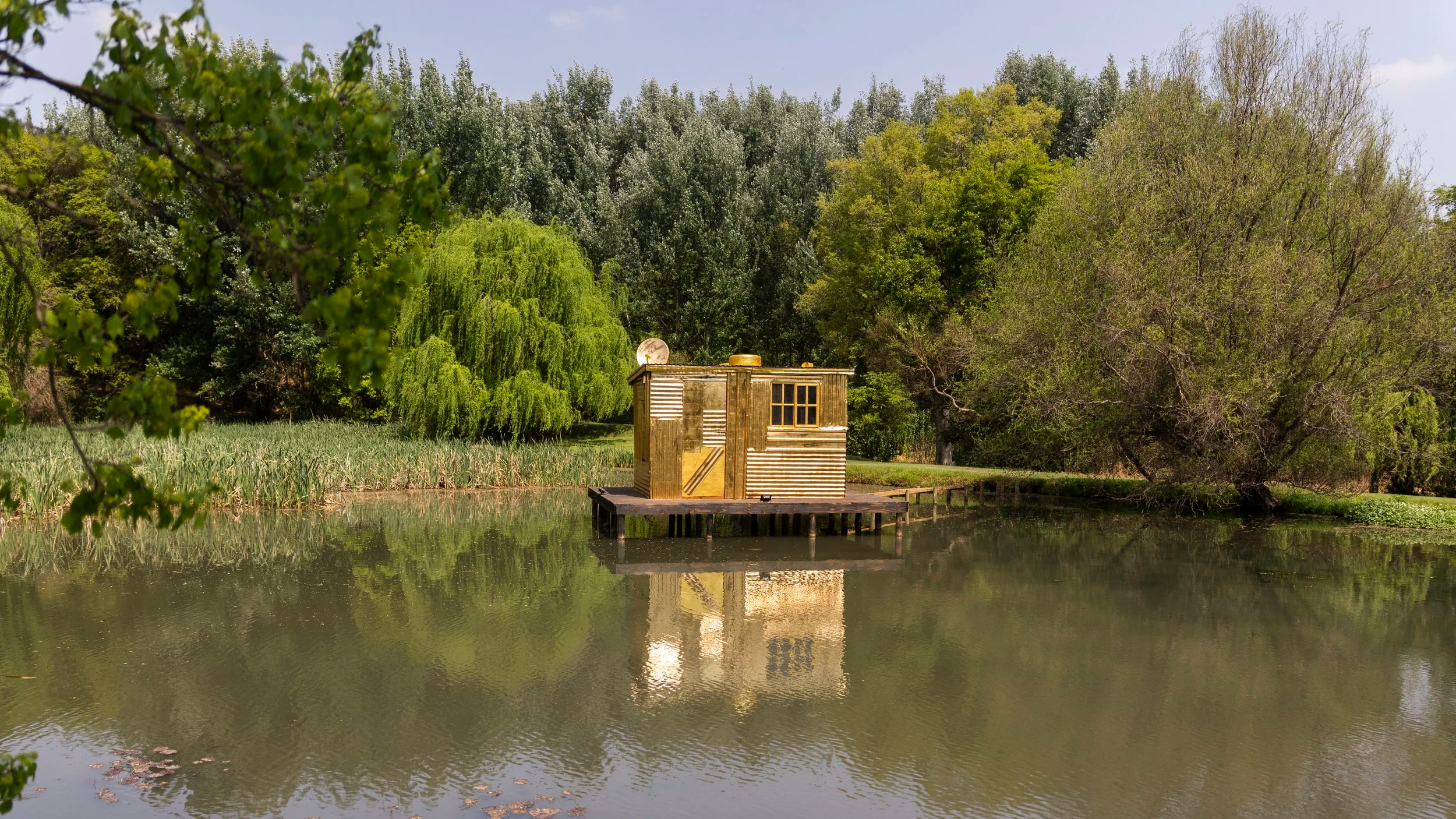
HOME - iKhaya
Nirox Sculpture Park.
Gold leaf, corrugated metal sheet, wood.
3,5 x 2,5 x 2,3m
2025.
HOME – ikhaya reflects on the precarious reality of millions who inhabit informal settlements—structures born of necessity, crafted from whatever materials can be found. These makeshift architectures speak to an existence shaped by impermanence and systemic socio-economic disparities.
This work seeks to confront that reality while acknowledging the profound beauty, resilience, and dignity embedded within it. The use of gold leaf evokes Johannesburg’s origins as a city founded on wealth extracted from the earth, contrasting sharply with the enduring poverty surrounding it. In doing so, the sculpture becomes a dialogue between abundance and deprivation, permanence and transience.
The title itself underscores a deeper inquiry: the distinction between a house—a physical shelter—and a home, an intimate, often fragile, construct of belonging and connection. Through HOME – ikhaya, I invite viewers to reflect on what constitutes home, to reconsider our interdependence as human beings, and to reimagine community as a shared space with one another and with nature.
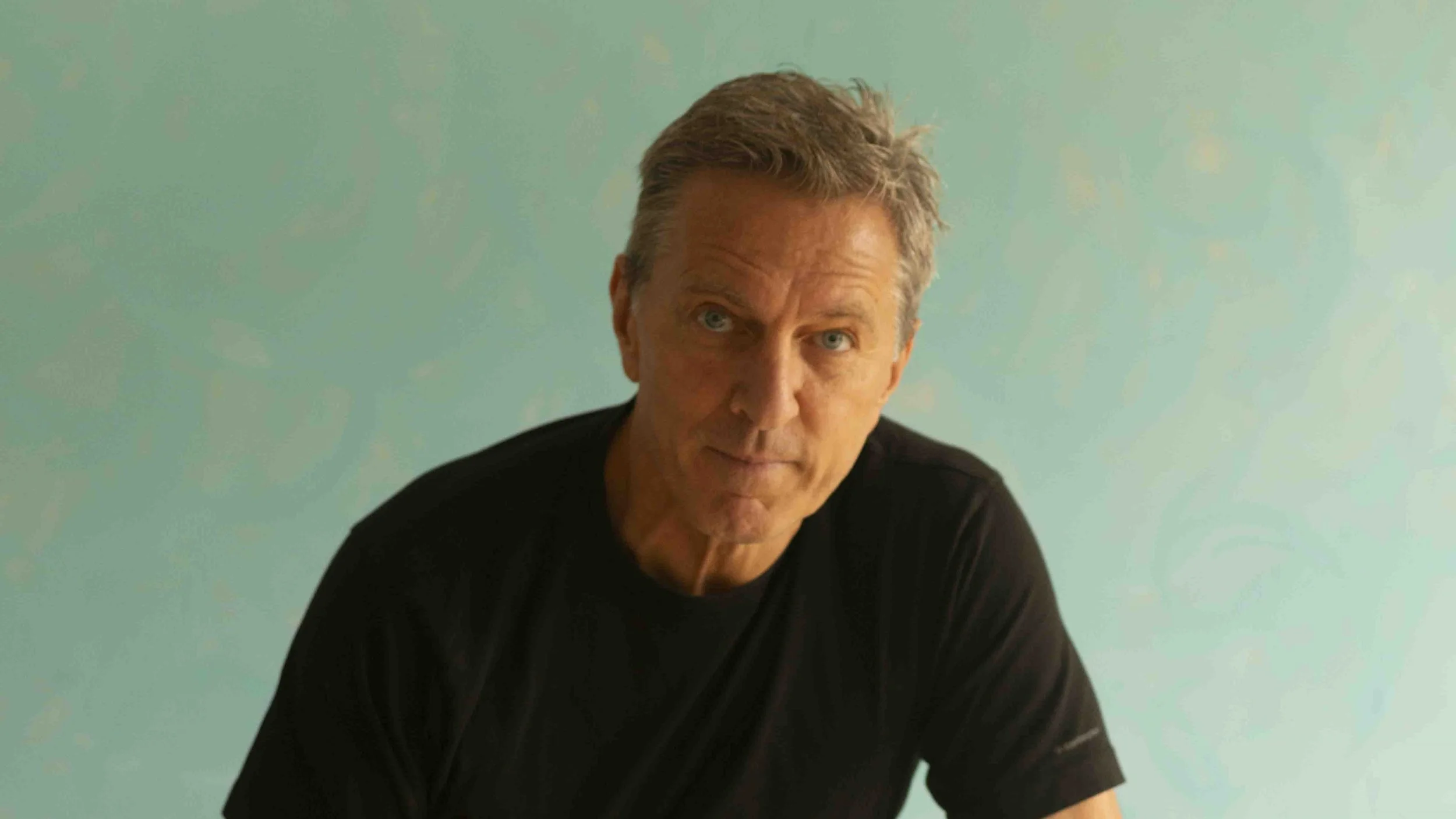
Diego Masera (AR)
Born in Argentina, Diego Masera is an artist educated in Italy and holds a Doctorate from the Royal College of Art in London. His practice conceives art not as a finished object but as a living process — one that unfolds through the presence, movement, and participation of the public. The spectator, in his works, becomes co-creator, leaving a trace, a footprint, a gesture that completes the piece.
Masera’s work explores the dialogue between material, memory, and human resilience. Having lived and worked across several continents, he transforms cultural encounters into visual and spatial reflections on belonging and impermanence. Materials such as debris, wood, metal, and gold leaf become symbolic languages — remnants of construction and decay that speak of fragility and hope.
In his installation HOME – ikhaya (2025), a structure built from corrugated metal and covered in gold leaf reimagined the South African shack as both shelter and symbol — a meditation on inequality, resilience, and dignity. The work, situated in Johannesburg’s Cradle of Humankind, bridged material poverty and spiritual richness, transforming the precarious into the luminous.
Masera’s subsequent projects deepen this inquiry. PASOS, his most recent installation, extends the dialogue between ruin and renewal: the floor of the space becomes a field of debris, and the visitors’ footsteps carve a living path through it — a collective act of reconstruction.
He has exhibited internationally in Austria, Italy, Kenya, South Africa, Mexico, and Panama, among other countries. Masera’s art invites audiences to walk, pause, and listen — to inhabit silence as a space of creation.